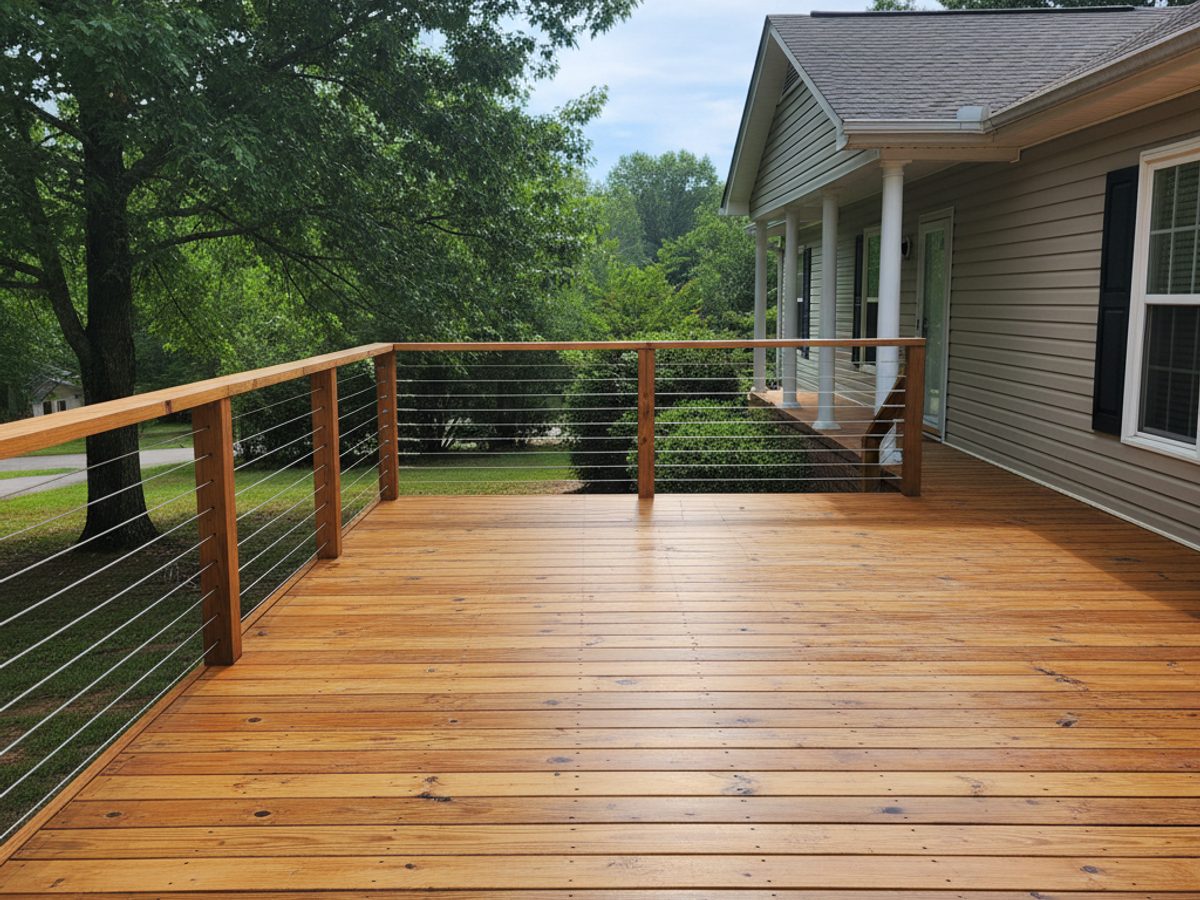
Mobile sits on sandy loam over clay in a lot of neighborhoods, and near the bay you're closer to the water table than you might think. That changes how a deck actually gets built here compared to, say, north Alabama. A builder who learned the trade in Huntsville or Birmingham and moved south doesn't automatically know that. The ones who've been doing this on the Gulf Coast for years do, and it shows in small decisions you won't notice unless you know to look for them.
Why the ground and the weather here change the job
Footings need to bear on solid soil, not float on fill. A lot of lots in west Mobile and Saraland were graded and filled before the subdivision went in, and that fill can be soft for the first couple of feet. A builder who's paying attention will dig test holes or at least push a soil probe before committing to a footing depth, not just default to whatever depth the last job used. In older streets around Midtown, Oakleigh, and Spring Hill, the soil's had decades to settle, but you're also dealing with mature tree roots and drainage patterns that have shifted since the house was built in the 1940s or 50s.
Then there's the humidity. Mobile runs wet most of the year and gets a real hurricane season from June through November. Lumber that isn't properly treated or sealed before that first summer will start showing mildew streaks within a season. Framing lumber that sits exposed to rain for a week during construction, uncovered, is already absorbing moisture it won't fully release. Ask how they store material on site. A tarp over a stack of joists is a five-minute job and it tells you something about how the crew thinks.
What a builder should do before anyone touches a saw
The City of Mobile requires a permit for most deck construction, and Mobile County has its own process if you're outside the city limits. That means a footing inspection before concrete gets poured, and usually a framing inspection before the decking boards go down. A contractor who tells you permits are "optional for a project this size" is either wrong or hoping you don't ask again. Skipping the permit doesn't just risk a fine, it means nobody with training ever looked at your footings before they got buried.
If you're in a newer subdivision with an HOA, there's often a separate approval step for anything visible from the street, sometimes a setback requirement too. That's worth confirming before design work even starts, because redesigning a deck after the HOA rejects it costs you real time.
Ask what footing depth they're planning and why. There's no single right answer, it depends on soil bearing capacity and the load the deck will carry, but a builder should be able to explain the number instead of just stating it.
Materials and fasteners that actually matter down here
Pressure-treated pine is still the standard structural lumber for framing, but the grade matters. Ground-contact rated lumber for posts that touch soil, not the cheaper above-ground rating. Composite decking has gotten a lot more popular here because it doesn't feed termites, and Gulf Coast termite pressure is real, not theoretical. If a builder shrugs off termite risk, that's a gap in local knowledge, not confidence.
Fasteners are the detail most homeowners never think to ask about, and it's the one that separates a deck that lasts 20 years from one that's rusting at the joist hangers by year six. Near the bay, salt air in the atmosphere accelerates corrosion on standard galvanized screws. Hot-dipped galvanized or stainless fasteners cost more, but they're the right call within several miles of the water, and honestly a good idea further inland too given how humid it stays. Ask what fasteners they're using. If the answer is "whatever's at the hardware store," keep asking questions.
Hurricane straps and proper joist hanger connections at the ledger board matter more here than in a lot of the country, because wind load on an attached structure is a real design factor in coastal Alabama, not an afterthought.
Red flags worth walking away from
- No written contract, or a contract that doesn't spell out lumber grade, fastener type, and footing depth.
- A quote that's dramatically lower than every other bid you got. Someone's cutting a corner you can't see yet.
- Reluctance to pull a permit, or vague answers about who's responsible for it.
- No proof of liability insurance. If a crew member gets hurt on your property and the contractor isn't insured, that liability can land on you.
- A deposit that's more than about a third of the total project cost up front. Materials and mobilization justify a deposit, but a builder asking for most of the money before any work starts is a bad sign.
- Can't tell you how long the concrete footings need to cure before framing loads get set on them. Around here, with the heat and humidity, that's typically several days minimum, and rushing it is how you get settling later.
What a good conversation with a builder sounds like
You want someone who asks you questions back. How do you plan to use the deck, is it grilling and a table or do you want it rated for a hot tub, because that changes the joist spacing and footing count. Do you want it attached to the house with a ledger board, which needs flashing done right to keep water from getting behind your siding, or freestanding, which costs a bit more in materials but avoids that whole problem entirely.
A builder who's done this a while in Mobile will bring up drainage without you asking. Water needs somewhere to go, and if your yard slopes toward the house, or your lot has one of those flat, poorly-graded backyards common in a lot of the newer subdivisions, that affects where the deck sits and how the ground under it gets prepped.
None of this is complicated once you know what to ask. It's just specific, and a contractor who's actually done the work will answer specifically instead of in general reassurances. We build decks around Mobile and the surrounding towns, and you can see the kind of work we do at Majestic Deck. Get a few bids, ask the same questions of each one, and pay attention to who actually answers them.